5. Neuromuscular Electrical Stimulation
Our everyday voluntary movements are made possible by connections between the brain and the body’s nerves, but after this connection is severed due to stroke, the affected nerves and muscles can no longer send or receive the sensory stimulation necessary to move. This is where neuromuscular electrical stimulation can be helpful. Neuromuscular electrical stimulation applies small electrical pulses to paralyzed muscles to restore or improve their function.
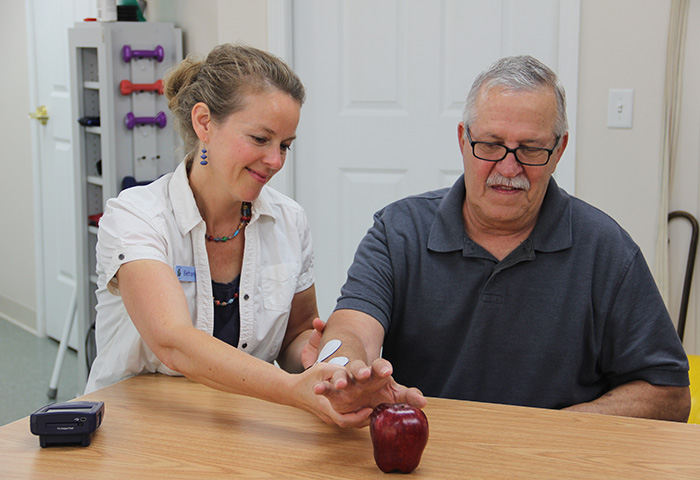
Devices like the Saebo MyoTrac Infiniti uses EMG Triggered Stimulation
which is a combination of biofeedback and electrical stimulation. Stimulation
by devices like these are triggered to the desired muscle group (i.e., finger
extensors, elbow extensors, etc.) once the client deactivates or relaxes the
opposite spastic muscle group (i.e., spastic finger flexors, elbow flexors,
etc).
With Sensory Electrical Stimulation (SES), it is believed to enhance the neural plasticity and activate brain areas, helping with stroke rehabilitation. Studies show that providing SES to an impaired nervous system can prime the cortex ultimately leading to improve neuroplasticity, motor recovery and function.
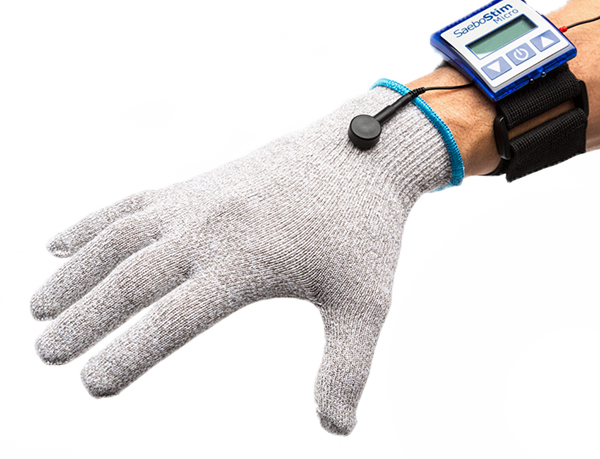 Research suggests that sensory electrical stimulation (SES)
can be an effective treatment strategy for improving sensory and motor
function. By providing low-level stimulation, increased signals are delivered
to the brain and can lead to improved function and cortical reorganization.[Saebo]